
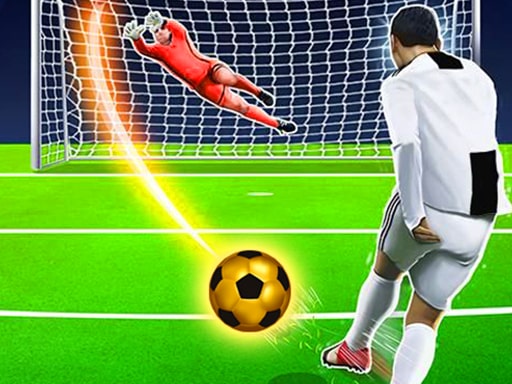
Flick-to-Shoot Free Kick Mechanics
Precision Kick Soccer strips soccer down to its most tense moment: the free kick. There is no midfield build-up, no passing sequences, and no stamina management. Instead, every round hinges on a single strike or save. When shooting, you flick your finger on the screen to aim and shoot. The speed of your flick determines shot power, so a slow drag produces a soft, easily saved ball while a fast flick drives it harder toward the net. Placing the ball in the corners is the most reliable way to beat the goalkeeper, because central shots are easier to reach.
Goalkeeper Mode and Match Rounds
Matches alternate between shooting and defending. On your defensive turn, you swipe to dive and block incoming shots. Timing matters more than direction alone, since a well-timed dive can reach a powerful shot, while a mistimed one leaves the goal exposed. Each match consists of rounds where players take turns shooting and saving. The player with the most goals after all rounds wins. This turn-based structure keeps matches short and makes every individual kick carry weight.
Training Mode and Skill Development
A training mode lets you practice accuracy and learn the ball trajectory without match pressure. Because the game uses realistic ball physics, shots curve and dip based on how you flick, so the same aim point can produce different results depending on power and angle. Studying the goalkeeper's movements before you shoot helps you anticipate which side they favor. Staying calm under pressure matters too, since a single goal can decide a round.
Who This Game Suits
Precision Kick Soccer is designed for short play sessions, making it a natural fit for players who want a quick sports fix rather than a full match simulation. The controls are intuitive enough to start playing right away, but the combination of flick power, corner placement, and goalkeeper timing gives it a skill ceiling that rewards repeated practice. Family-friendly content and smooth graphics keep the experience accessible across ages.





Editorial Notes