
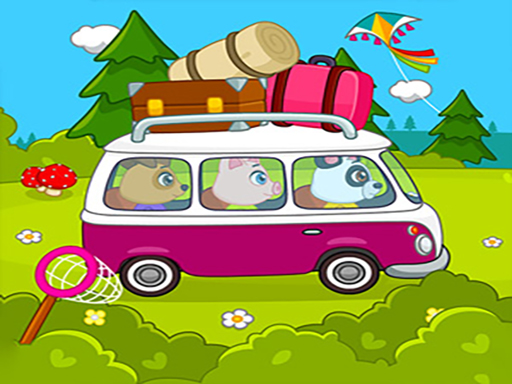
Packing for the Trip
The game opens at home, where the bear family is preparing for a spring outing. Children tap on essential items such as food, blankets, tools, a flashlight, and a picnic basket to add them to the family's bags. This packing phase sets a practical tone: the trip only works if the right supplies come along. The interaction is simple enough for young players to follow without reading, relying on visual cues and cheerful responses.
On the Road to the Campsite
After packing, the family travels toward the campsite. Players slide a finger left or right to steer past natural obstacles like fallen logs, rocks, muddy puddles, and streams. This section introduces a light coordination challenge. Timing matters, but the pace stays gentle, and the game provides clear visual feedback when an obstacle is avoided. It is the closest thing to an action sequence in an otherwise calm game.
Setting Up Camp
Once the bears arrive, the campsite becomes an activity hub. Players drag tent pieces into place, tap ingredients to cook a barbecue meal, select desserts to feed the bears, and build kites by choosing colors and patterns. Each task uses a different touch interaction, which keeps the experience varied without adding complexity. The kite-building activity stands out because it invites open-ended design choices rather than a single correct answer.
A Safe, Guided Experience
Little Bear Camping Adventure is built for young children, with bright visuals, cheerful sounds, and no violence or inappropriate content. The game encourages teamwork and problem-solving through camping scenarios. Positive feedback after each completed task helps build confidence. Parents looking for a calm, structured game that models outdoor preparation and cooperation will find the content matches that goal.










Editorial Notes