
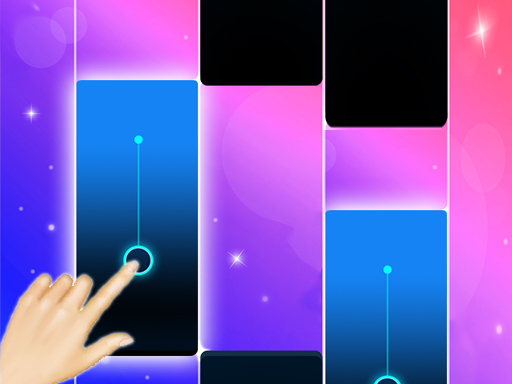
The Core Tap Mechanic
Piano Tiles Rhythm Arcade strips rhythm gaming down to a single action: tapping black tiles as they reach a fixed target line. Every tile you hit produces a musical note, and a full run stitches those notes into a recognizable song. The challenge comes from timing, not complexity. Tap early or late and you miss the note. Miss a single tile and the round ends immediately, so a clean run demands steady focus rather than fast reflexes alone.
Song Selection and Difficulty
The game includes a selection of melodies that range from slow and gentle to fast and demanding. Slower songs give you more time between tiles, making them a sensible starting point for learning the timing window. Faster tunes shrink that window and test how well you have internalized the rhythm. Because each song can be replayed, you can work toward a perfect score on a track before moving to a quicker one.
Controls and Platform Fit
Controls are intentionally minimal. On a touchscreen, you tap the tile with your finger. On a computer, you click with the mouse. There is no swiping or dragging, which keeps the input consistent across devices. The game runs without an internet connection, so sessions are not tied to a network. Immediate audio feedback confirms each successful tap, while a miss ends the attempt right away.
Who It Suits and How to Improve
Piano Tiles Rhythm Arcade is built for short, low-pressure sessions rather than competitive play. Its clean visuals and straightforward rules make it accessible to children and adults alike. If you want to get better, start with slower songs to learn the timing, then replay them to build muscle memory. Focusing on the target line instead of the moving tiles helps you react to the right moment. Staying relaxed and avoiding rushed taps tends to produce more consistent runs.










Editorial Notes