
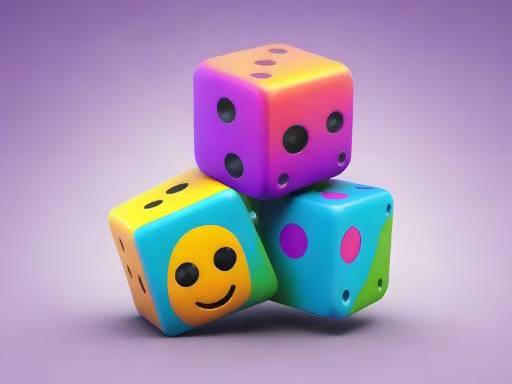
Matching Dice by Number and Color
Number Merge Dice Puzzle is built around a single rule: connect three or more dice that share both a number and a color. Doing so merges them into one die with a higher number. That new die can then join further merges, so a well-planned connection can set off a chain reaction across the board. Because every merge changes the layout, each move alters what is possible next.
Controls and Moment-to-Moment Play
You play by tapping and dragging to draw a line through matching dice. At least three dice are needed to trigger a merge. The interface is designed to be intuitive, so the challenge comes from reading the board rather than learning complex inputs. There is no timer, which means you can study the grid and decide the best order to connect groups before committing to a move.
Planning Around an Unpredictable Board
Chance plays a role because the dice values and colors on the board are not entirely under your control. The strategic layer comes from deciding which groups to merge first, how to open space, and when to aim for a chain reaction instead of a small gain. Merging smaller numbers early can free up room for larger combinations later. The game ends when no more matches are possible, so every session is a race to maximize score before the board locks up.
Session Length and Visual Style
Bright colors and smooth animations keep the board readable as it changes. The game is structured for quick breaks, but the lack of a timer also supports longer, more deliberate sessions. Its casual nature and simple rules make it approachable for newcomers, while the planning required to keep merges going gives experienced puzzle players something to optimize.









Editorial Notes