
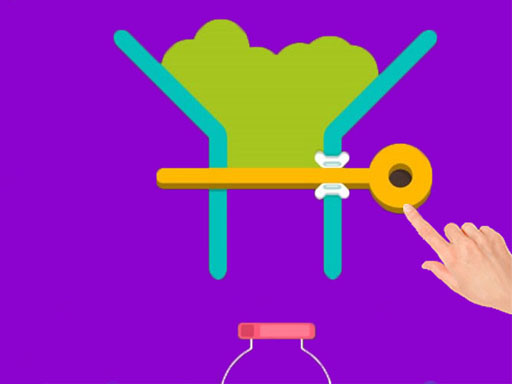
What You Actually Do
Each level presents a fixed arrangement of colored water and metal pins. Your only action is to tap or click a pin to remove it. When a pin disappears, the water it was holding flows downward under gravity. The goal is to ensure every drop of a given color lands in the flask of that same color. Pulling a pin at the wrong moment sends water into the wrong flask, mixes colors, and usually forces a restart. There is no timer, so the challenge comes entirely from reading the board before you act.
Why Order Matters
The puzzle is not about speed or reflexes. It is about sequencing. A pin that looks harmless might block a path that a different color needs later. Because water only moves down once released, you have to trace each color's possible route and decide which pin to remove first, second, and third. Later levels introduce more colors and denser pin layouts, so the number of possible orders grows quickly. The game rewards players who pause, scan the whole board, and think two or three moves ahead.
Difficulty Curve and Accessibility
Early levels use two or three colors and wide gaps between pins, making the correct order fairly obvious. As you progress, additional colors appear and pins sit closer together, so a single wrong pull can ruin an otherwise solved board. The game runs in a browser with no download and works with touch or mouse, which makes it easy to play in short sessions on a phone, tablet, or desktop. There is no time pressure, so younger players and anyone who prefers calm puzzle-solving can take as long as they need.
When You Get Stuck
Restarting a level is not a punishment. Because the layout never changes, a fresh attempt lets you test a different pin order with full knowledge of what went wrong. Observing the full board before pulling anything is the single most useful habit. If two colors share a narrow channel, identify which one must pass first. Practice improves pattern recognition, and many players find that the same logic carries over to later levels with more colors.







Editorial Notes