

What You Actually Do
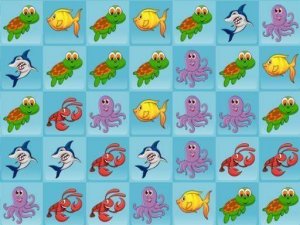
The board is filled with colored blocks. Your task is to spot any group of three or more blocks of the same color that touch side by side or top to bottom. Tap or click that group and it vanishes, awarding points. Blocks above the gap then fall downward, and those falling pieces can accidentally form new matching groups. The game continues until no legal moves remain. There is no timer, so you can study the board as long as you like before each tap.
Why It Feels Different from Typical Match-3 Games
Most match-3 titles ask you to swap two adjacent pieces. Color Block Puzzle Match skips that step entirely. You only tap existing clusters, which means the core challenge is visual scanning rather than move planning. Because new blocks drop automatically after every clear, each tap changes the board in ways you cannot fully predict. That randomness keeps every session different, even though the rules never change.
Access and Platform
The game runs in a desktop or mobile browser. Nothing needs to be installed, and there is no account creation. That makes it easy to open during a short break or hand a device to a child without setup. The colorful block design and one-tap control scheme are simple enough for young players, while the chain-reaction potential gives older players something to aim for.
How to Improve Your Score
Scan the whole board before tapping. Clearing a large group often drops blocks into new configurations that create additional matches, so look for clusters near the bottom or middle where falling pieces can trigger a chain. Patience matters more than speed here; since there is no time limit, the highest scores usually come from players who pause and check for every possible group before acting.






Editorial Notes