
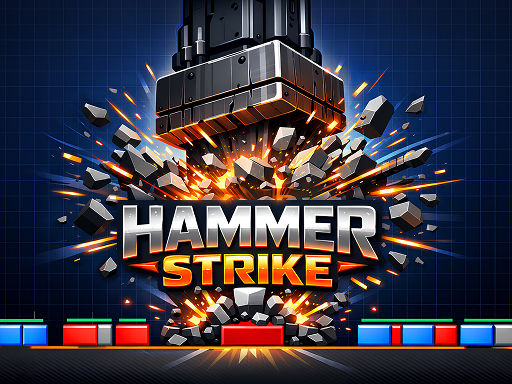
Core Loop and Time Pressure
Hammer Smash: Block Breaker Arcade asks you to keep a time bar from filling completely. Every block you destroy reduces that bar, but it constantly refills. The tension comes from balancing the urge to swing quickly against the need to aim carefully. A missed swing wastes precious seconds, while a well-timed hit on a dense block can buy a comfortable buffer. There are no fixed levels; the game continues until the bar maxes out, so each run is a personal endurance test.
Controls and Charging Strikes
You position a hammer on screen, then hold a button or tap to charge power. Release to swing. The longer you charge, the more force the hammer delivers, which matters for larger or denser blocks that require a stronger blow. This drag-and-charge system keeps inputs simple, letting you focus on timing rather than complex button combinations. The hammer's position and your charge duration are the only variables you control, making the game accessible but not shallow.
Difficulty Modes and Block Variety
Three settings—Easy, Normal, and Hard—change how fast blocks appear and how much force they need to break. Easy mode gives newcomers room to learn the charge-and-release rhythm. Hard mode speeds up the pace and increases durability, demanding quicker decisions. Blocks come in different sizes and types; larger or tougher ones typically offer greater time reduction when destroyed, so prioritizing them can extend a run. The variety prevents the action from feeling repetitive.
Who It Suits and How to Improve
Because the rules are straightforward and the theme is family-friendly, Hammer Smash works for a wide age range. Players who enjoy reflex-based arcade challenges with a strategic layer will find the time management engaging. To improve, practice on Easy until charging feels natural, then watch for clusters of blocks you can hit with one swing to maximize time savings. Staying calm on higher difficulties helps, since blocks fall faster and panic leads to wasted swings.









Editorial Notes