
One-Tap Control and Constant Adjustment
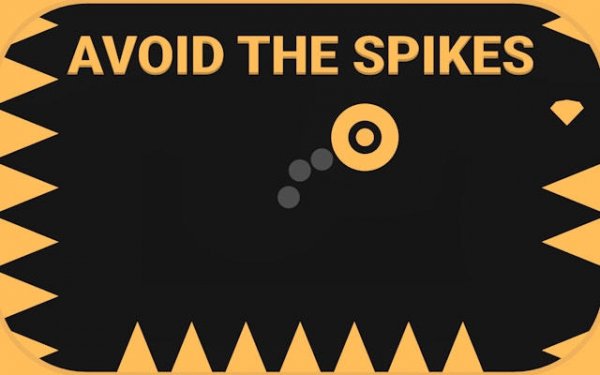
Vertical Path: Endless Corridor Challenge reduces its control scheme to a single input. Holding a tap makes the character rise; letting go lets it fall. Because the corridor is narrow, the character is always drifting toward one edge or the other. The player's real job is not simply to avoid obstacles but to stay near the middle, where there is enough room to react in either direction. That distinction matters. A player who taps only when an obstacle appears is already too late. A player who manages altitude continuously has a better chance of surviving the next few seconds.
How Obstacles Shape Each Run
Hazards enter from the left and right at different heights, so the safe path changes constantly. There is no pattern to memorize in advance; instead, players learn to read the spacing between obstacles and adjust early. Frantic tapping usually pushes the character into a wall, while a steadier rhythm keeps movement small and predictable. The first collision ends the run immediately. That rule gives every input weight and removes any cushion between a small mistake and a full restart.
Scoring, Skins, and Personal Records
There are no levels to finish and no checkpoints to fall back on. Progress is measured by the length of a single run and the score attached to it. Beating a personal best is the main long-term goal, and each attempt starts from zero. Successful runs also unlock cosmetic skins for the character. These skins do not change hitboxes, speed, or obstacle behavior, so they function as a visual record of time spent rather than a gameplay advantage. Collecting them gives dedicated players a secondary target once score chasing becomes routine.
Session Length and Who It Suits
Runs are short by design. The game opens directly into play, with no tutorial sequence or menu chain standing between the player and the first attempt. That makes it easy to fit into a short break, but the difficulty curve means a session can stretch longer than expected when a good run is in progress. Players who enjoy reflex-driven arcade games and measurable self-improvement will get the most from it. Those looking for story, multiplayer, or level variety will find the scope intentionally limited.









Editorial Notes