
World Design and Exploration
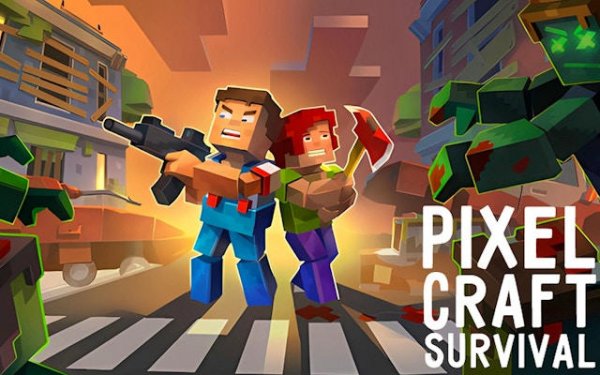
The game world is built from blocks and split into distinct zones, each with its own visual theme and resource set. Forested areas yield wood and plant materials, while rocky highlands provide stone and ore. This division matters because your crafting options depend on where you travel. The pixel-art textures on three-dimensional shapes give the world a readable, slightly retro look that makes materials easy to identify at a glance.
Gathering and Crafting Loop
Every session revolves around collecting raw materials and converting them into functional items through a simple crafting interface. Wood, stone, and other natural resources combine in different ways to produce tools, defensive items, and structural pieces. Experimentation is rewarded because different combinations yield different results. Inventory space becomes a real constraint as you accumulate more resources, forcing you to decide what to carry and what to leave behind.
Hazards and Wave Encounters
Not every area is safe to explore at leisure. Some zones contain moving hazards or environmental puzzles that require careful timing to pass. Other situations send creatures or forces at you in waves, testing whether you can craft and use items under pressure. These two encounter types demand different responses: puzzles reward observation and patience, while wave attacks reward preparation and quick item management.
Strategic Choices and Progression
The game does not force a single path. You decide when to explore, when to craft, and when to fortify a position. Some players will prioritize strong defenses and hold ground; others will stay mobile and gather resources quickly. As you advance, more complex items become craftable and new areas open up. Multiple locations each carry their own resource and challenge profile, which gives you reasons to revisit sections and try different strategies.




Editorial Notes