
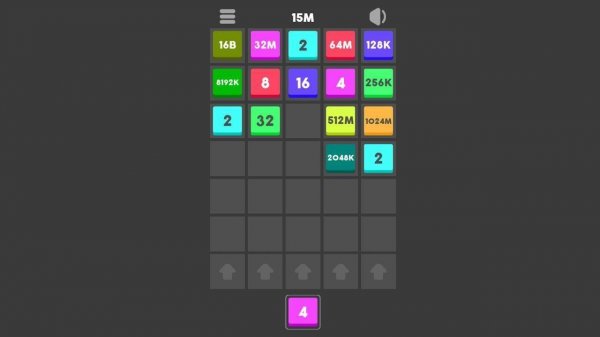
Sliding Rows and Merging Numbers
Tile Merge Number Challenge places you in front of a grid packed with numbered tiles. Each turn, you choose a row or column and shift every tile in it one direction. When two tiles showing the same number collide, they fuse into a single tile worth one step higher — two 2s become a 4, for instance. That merge frees up space and sets up the next combination. After every move, a new tile drops onto the board, gradually tightening the available room. The run ends once the grid is completely occupied and no further merges are possible.
Planning Without a Clock
Nothing in this game pressures you to hurry. There are no timers, no penalties for pausing, and no move limits. That design choice turns each turn into a small planning exercise: you can weigh where future tiles might land and which merges preserve the most breathing room. Because the starting arrangement and tile drops are random, no two sessions unfold the same way. A strategy that kept the board clean last time might not hold up now, so adaptability matters as much as foresight.
Scoring and Chain Reactions
The scoring system rewards efficient merges and chain reactions, so stringing several combinations together in one move tends to pay off more than isolated pairings. This creates a gentle layer of achievement without adding stress — you are always chasing a higher score, but the game never punishes a slow, deliberate pace. There is no fixed endpoint; the goal is simply to reach the best score you can before the grid fills up.
Readable Visuals for All Ages
Bright, clear colors and large, legible tile numbers make the board easy to scan at a glance. The layout stays uncluttered, with no distracting animations or sound cues pulling your attention away from the puzzle. That simplicity supports both short bursts of play and longer sessions, and it makes the game approachable for younger players and older adults alike. Over time, players tend to develop personal techniques — such as parking higher-value tiles in one corner to keep merge paths open.










Editorial Notes