
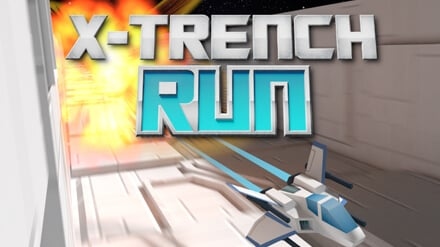
Piloting Through a Narrow Space Corridor
Corridor Pilot: Galactic Rush puts you in a small spacecraft inside a tight, twisting passage. Movement uses standard directional inputs for four-way control, while a separate button fires the ship's laser. That laser clears obstacles and damages enemy ships that appear along the route. The challenge is not just aiming—it is keeping the ship steady as the corridor shifts and the pace climbs.
How the Difficulty Ramps Up
The game accelerates steadily as you progress. Turns become tighter, obstacle clusters grow denser, and incoming fire demands quicker reactions. The corridor layout changes unpredictably, so memorizing a single path won't carry you far. Instead, you learn to read the screen and make faster decisions. Each run feels different because the pressure builds at a rate that rewards adaptation over raw reflexes alone.
Boss Fights and Pattern Recognition
At intervals, the standard obstacle course pauses for a boss encounter. These larger enemy ships follow distinct attack patterns. You need to study those patterns, find safe windows, and land hits while avoiding volleys of projectiles. Beating a boss gives a significant score bonus and a short breather before the corridor resumes at a higher speed. That pause is tactical, not just a reward—it resets your focus for the next stretch.
Power-Up Decisions That Extend Runs
Three temporary enhancements appear along the route. A speed reducer slows the game briefly, giving you breathing room. A shield absorbs one hit from any hazard. A wall destroyer clears a section of the corridor ahead. Knowing when to grab and activate each one is central to surviving longer. Grabbing a speed reducer too early wastes its benefit; saving a shield for a dense cluster can mean the difference between a new personal best and a quick restart.
High Score Focus and Replayability
There are no levels or endings. The only goal is to survive as long as possible and accumulate points. That structure encourages repeated attempts, because every failure teaches you something about the corridor's behavior or a boss pattern. Leaderboards or personal best tracking add motivation for improvement. If you enjoy arcade games where the score is the story, this one is built around that loop.







Editorial Notes